

A Fan’s Perspective: How Ace Frehley Blew the Roof Off My Musical World
When word spread that Paul Daniel “Ace” Frehley passed away last week, the rock world lost more than just a founding member of KISS. It lost the primary visual and sonic architect of 1970s hard rock guitar. I lost my first true guitar idol.
For a generation of kids, Ace was the ultimate guitar hero. He wasn’t a calculated corporate product; he was a pure, raw channel of rock ‘n’ roll energy.
Mismatched Sneakers and Natural Tone
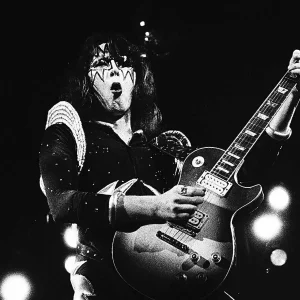
The legend of the “Spaceman” began with a complete lack of pretense. In January 1973, Paul Stanley, Gene Simmons, and Peter Criss put an ad in the Village Voice looking for a lead guitarist. Ace showed up to the audition looking like a complete outsider, wearing one red sneaker and one orange sneaker. But the moment he plugged in, the eccentric footwear didn’t matter. His playing was loud, aggressive, and undeniable.
What made Ace an anomaly among his contemporaries was his complete detachment from formal music theory.
“I’m an anomaly. I’m an un-schooled musician, I don’t know how to read music, but I’m one of the most famous guitar players in the world, so go figure.” — Ace Frehley
Ace didn’t think in terms of scales, modes, or intervals; everything came entirely from natural talent, intuition, and raw feel. He once famously quipped that if he had known he would become a guitar legend and an idol to so many people, he would have practiced a lot more.
Defiant Solo Success
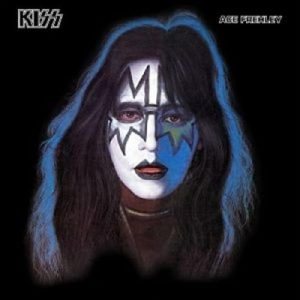
By 1978, internal tensions were pushing KISS to the brink of a permanent breakup. Peter Criss and Ace Frehley were both deeply unhappy and threatening to quit to pursue solo projects. To save the multi-million dollar KISS empire from imploding, visionary manager Bill Aucoin stepped in with a desperate pressure-valve strategy: all four members would release individual solo albums on the exact same day.
Conventional industry wisdom assumed the frontmen, Paul Stanley and Gene Simmons, would dominate the charts. Instead, Ace’s self-titled solo album completely dominated. Backed by his smash cover of “New York Groove,” Ace’s record outpaced the others in sales, critical acclaim, and radio airplay, while the heavily hyped efforts of the band’s leaders largely flopped by comparison. It proved that Ace was the true musical heartbeat of the band.
Classic Riffs and the Smoking Guitar
Ace’s signature approach was built on massive, heavy-hitting pentatonic riffs and melodic, singing leads. He wrote “Cold Gin”—one of the most recognizable and enduring guitar riffs in rock history—for the band’s 1974 debut. Yet, insecure about his own vocal abilities, he handed the lead vocals over to Gene Simmons.
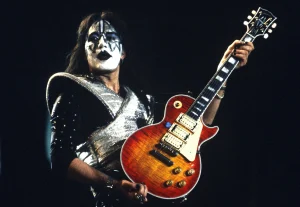
During the definitive 1975 KISS Alive! era, Ace’s spectacular live guitar solos were famously launched straight off the heavy groove of the song “She.” The band would grind to a halt, leaving Ace entirely alone under the spotlights. It was here that he debuted his legendary smoking guitar trick. In those early days, it was a crude, homemade gimmick where he stuffed smoke bombs inside the control cavity of his Tobacco Sunburst Gibson Les Paul, forcing clouds of thick smoke to spew out from the neck pickup mid-shred.
It wasn’t until 1977’s Love Gun album that Ace finally took center stage on lead vocals with “Shock Me.” Once that track entered the setlist, it became the permanent, official home for his smoking guitar routine, which by then had been professionally upgraded to include dazzling pyrotechnic flares.
The foundation of the classic KISS catalog relies heavily on Ace’s phrasing. His contributions provided the edge that balanced the band’s pop sensibilities:
-
“Rock Bottom”: A masterclass in “light and shade.” While Paul Stanley wrote the driving, heavy electric main riff, Ace arrived at the Dressed to Kill sessions with an intricate, classical-style acoustic introduction he had composed entirely by ear. Spliced onto the front of the track, it remains a staggering showcase of his intuitive musicality.
-
“Deuce” and “Strutter”: The raw, swaggering studio tracks transformed into high-octane guitar clinics on the definitive KISS Alive! (1975) album.
-
“Black Diamond”: A lesson in building tension, topped with a soaring, weeping outro solo.
-
“Let Me Go, Rock ‘n’ Roll”: Pure, blues-infused, lightning-fast rockabilly on steroids from the Alive! record.
-
“Parasite”: A heavy, proto-metal riff so dark and aggressive it was later covered by thrash bands like Anthrax.
The Cycles of Exit and Reunion
As the late 70s bled into the 80s, the excessive lifestyle of the road took its toll. Following the departure of drummer Peter Criss, Ace found himself increasingly isolated and creative control slipped away. He officially left the band after 1982’s Creatures of the Night.
For over a decade, fans dreamed of seeing the original four back in makeup. That dream became reality in 1995 during an acoustic MTV Unplugged set, which immediately catalyzed the massive 1996 global Reunion Tour. The tour smashed box office records, proving the timelessness of the original lineup’s chemistry. However, old business fractures and lifestyle friction resurfaced, and by the conclusion of the 2002 Farewell Tour, Ace left the group for the final time.
The Comet Rises: The Post-KISS Solo Years
When Ace officially walked away from KISS in 1982, he didn’t rush straight into the spotlight. He took his time, wood-shedded, and emerged in the mid-1980s with a formidable new vehicle: Frehley’s Comet. This wasn’t just a backing band; it was a high-energy, melodic hard rock powerhouse featuring co-lead vocalist and guitarist Tod Howarth, bassist John Regan, and future David Letterman drummer Anton Fig (who had secretly played drums on Ace’s 1978 solo masterpiece).
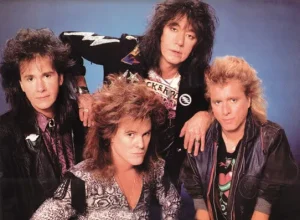
In 1987, the band dropped their self-titled debut, Frehley’s Comet, which instantly struck a chord with fans starving for Ace’s signature crunch. The album yielded massive rock radio hits like “Into the Night” and the anthemic, driving groove of “Rock Soldiers”—a deeply personal song where Ace addressed a notorious, high-speed police chase he’d engaged in while driving a DeLorean in 1983. The band followed it up quickly with the heavy-hitting Second Sighting in 1988, showing a sleeker, sharper, radio-ready edge that held its own against the dominant hair metal acts of the era.
By 1989, Ace dropped the “Comet” moniker and returned strictly to billing himself as a solo artist with the album Trouble Walkin’. The record brought back a rawer, heavier, street-level New York rock sound, featuring guest appearances by his old buddy Peter Criss and members of Skid Row. Tracks like “Shot Full of Rock” and a roaring cover of ELO’s “Do Ya” proved that even without the makeup, Ace’s streetwise swagger and lightning pentatonic licks were a brand all on their own. This solo run solidified his status as an independent rock icon, maintaining a fierce, loyal fan base that kept the flame burning bright all the way leading up to the historic 1996 MTV reunion.
The Toughest Fight: Sobriety
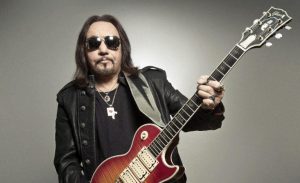
Behind the smoke and rockets, Ace faced severe struggles with alcohol and drug addiction for decades. The turning point arrived in 2006. Spurred by a deeply concerning phone call from his daughter, Monique, Ace reached out to his Alcoholics Anonymous sponsor and committed to getting clean.
Sobriety became his proudest achievement, eclipsing any gold record. Being clean allowed him to mount a massive, consistent solo career across the 2010s and 2020s, showing up to the studio and the stage with a clear head and his trademark cackle fully intact.
The Spark That Changed Everything
Ace’s reach is felt through the army of players he inspired. Guitar heroes like Dimebag Darrell, Mike McCready (Pearl Jam), John 5, and Tom Morello all point to Ace as the reason they first picked up the instrument.
For a 16-year-old kid in the mid-1970s raised strictly on the pristine, melodic pop-rock of bands like Badfinger, the Monkees, the Hollies and mostly the Beatles and George Harrison, dropping the needle on KISS Alive! was a cultural earthquake. Harrison taught guitar players how to serve the song with taste, but Ace taught them how to blow the roof off the building. Discovering those blistering leads on “Deuce” or the frantic energy of “Let Me Go, Rock ‘n’ Roll” blew open the doors to a completely different world—one of volume, attitude, and theatrical rebellion. Ace Frehley didn’t just play rock ‘n’ roll; he made it look like the coolest thing in the universe.
Ace was “The Man”
You can also read my review of Ace’s autobiography “No Regrets” here – Ace Frehley – No Regrets